
Grocery Shopping Support: More Than Just Running Errands
See how grocery support helps seniors maintain nutrition and independence.
Dr. Aishat O. MPH
4/6/20262 min read

Grocery Shopping Plays a Bigger Role Than Many Realize
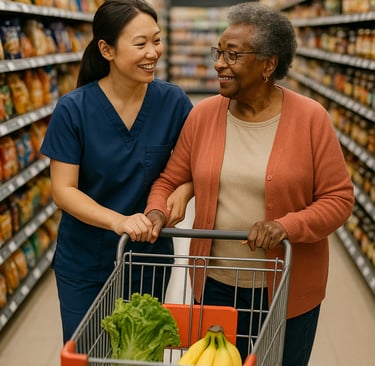
Grocery shopping is often viewed as a simple errand, but for older adults and individuals aging at home, it is a critical part of nutrition, routine, safety, and independence.
When grocery shopping becomes difficult, the impact reaches far beyond an empty refrigerator. It can affect meal quality, emotional well-being, and overall health. Non-medical grocery shopping support helps bridge this gap while allowing individuals to remain in control of their daily lives.
Why Grocery Shopping Becomes Challenging Over Time
Several factors can make grocery shopping harder with age, including:
Reduced stamina for walking long aisles
Difficulty lifting or carrying bags
Transportation limitations
Balance or mobility concerns
Fatigue that worsens after errands
Feeling overwhelmed by crowds or choices
When shopping feels exhausting or unsafe, individuals may avoid it altogether.
The Hidden Impact of Skipping Grocery Trips
When grocery shopping becomes inconsistent, seniors may:
Rely on processed or convenience foods
Skip meals or eat smaller portions
Experience unintentional weight loss
Lack key nutrients
Feel frustrated or discouraged
Over time, poor nutrition can weaken energy levels, immune function, and overall resilience.
What Non-Medical Grocery Shopping Support Includes
Grocery shopping support focuses on assistance and collaboration, not control.
Caregivers may help by:
Creating shopping lists together
Accompanying individuals to the store
Running errands based on preferences
Carrying and unloading groceries safely
Putting items away in accessible locations
Support is guided by individual routines and food preferences.
Supporting Nutrition Through Consistent Access to Food
Regular grocery support helps ensure:
Fresh food is available at home
Meals can be prepared consistently
Nutritional needs are met
Food choices align with personal habits
Access to groceries supports better eating habits and daily wellness.
Preserving Independence Through Shared Decision-Making
One of the most important aspects of grocery support is maintaining choice.
Caregivers encourage:
Participation in selecting foods
Respect for dietary preferences
Familiar brands and meals
Control over what enters the home
Independence is preserved through involvement, not removed through assistance.
Reducing Physical Strain and Safety Risks
Grocery shopping involves physical demands that can increase injury risk.
Support reduces:
Risk of falls in parking lots or stores
Strain from lifting heavy bags
Fatigue-related accidents
Stress associated with crowded environments
Reducing strain helps individuals remain active without overexertion.
Grocery Shopping as a Social and Emotional Activity
Shopping is more than a task—it is also a social experience.
Grocery support provides:
Companionship during outings
Conversation and engagement
A sense of normalcy
Confidence to remain involved in community life
These interactions support emotional well-being and reduce isolation.
Encouraging Routine and Structure
Regular grocery shopping supports:
Predictable meal planning
Consistent eating schedules
Routine outings
Structure within the week
Routine plays a key role in emotional stability and confidence.
Benefits for Seniors Living Alone
For individuals living alone, grocery support:
Reduces reliance on delivery or fast food
Encourages regular meals
Supports nutrition without isolation
Improves safety during errands
Having support makes shopping manageable rather than stressful.
Benefits for Families
Families often worry about nutrition and safety during errands.
Grocery shopping support provides families with:
Peace of mind
Confidence that food needs are met
Reduced worry about falls or fatigue
Support without replacing family involvement
Families remain partners while sharing responsibility.
When Grocery Shopping Support Is Especially Helpful
This type of support may be beneficial when:
Grocery trips feel exhausting
Bags are becoming difficult to carry
Nutrition has declined
Safety concerns are emerging
Transportation is limited
Early assistance prevents larger challenges.
Grocery Shopping Support as Preventative Care
Non-medical grocery support acts as preventative care by:
Supporting consistent nutrition
Reducing physical strain
Encouraging routine and engagement
Preserving independence
Prevention helps individuals remain healthy and confident at home.
Final Thought
Grocery shopping support is far more than running errands. It is a vital service that helps seniors maintain nutrition, independence, and quality of life. With the right support, individuals can continue making their own choices, enjoying familiar routines, and living safely at home.
Quality home care services for daily living support.
Support
SUBSCRIBE
admin@maxonacare.com
470-756-1751
©2025 Maxona Care LLC All rights reserved.